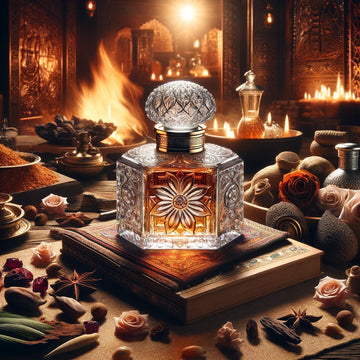
Arabic perfumery, with its rich history and exotic ingredients, has captivated perfume enthusiasts worldwide. From the deep, mysterious scents of oud to the intoxicating sweetness of rose and amber, Arabic perfumes offer a unique olfactory experience. This comprehensive guide will explore the origins, traditional ingredients, unique manufacturing methods, and how to choose and care for these exquisite perfumes.
Origins and History of Arabic Perfumery
Arabic perfumery has ancient roots, intertwined with the culture and history of the Middle East. The tradition of creating complex and long-lasting fragrances began with the ancient Egyptians, but it was in the Arabian Peninsula that perfumery truly flourished. Arabs perfected the art of extracting essential oils from flowers, plants, and woods, using techniques that have influenced perfume making to this day.
Traditional Ingredients in Arabic Perfumery
Ingredients are the heart of any perfume, and Arabs have mastered the use of various natural components to create their distinctive fragrances:
- Oud (Agarwood): The aromatic resin from trees infected with a particular type of fungus, known for its deep and complex aroma.
- Musk: Obtained from animals or synthesized to replicate the original warm, earthy scent.
- Amber: A sweet, sticky blend of tree resin and essential oil, which lends incomparable richness to fragrances.
- Rose: Roses, especially Damask Rose, are distilled to produce an essential oil with a sweet, floral aroma.
Unique Manufacturing Methods
Distillation and maceration are fundamental techniques in Arabic perfumery. Distillation, a process involving steam or water, is used to extract pure essential oils. Maceration allows solid ingredients to infuse their aromas into a liquid, capturing the essence of elements that are more difficult to distill.
Most Popular Arabic Perfumes Right Now
In our selection of Arabic perfumes, and immerse yourself in their unique scents. This collection includes everything from traditional fragrances to the most innovative ones, perfect for those seeking authentic olfactory experiences.
Oud: The Scent of Exclusivity
Oud is celebrated for its uniqueness and complexity. This ingredient has become a symbol of luxury and exclusivity, used in perfumes that aim to convey a sense of depth, mystery, and sophistication.
Rose and Amber: Renewed Classics
The combination of rose and amber creates perfumes that are both rich and refreshing. These ingredients have been pillars of Arabic perfumery for centuries, and their popularity persists thanks to their ability to evoke emotions and memories.
How to Choose the Perfect Arabic Perfume for You
Determining Your Preferred Fragrance Family
Exploring olfactory notes is the first step in identifying your preferred fragrance family and, thus, finding your ideal Arabic perfume. Families range from floral and fruity scents to woody and oriental ones, each offering a distinct sensory experience.
Tips for Trying and Selecting Perfumes
Trying perfumes requires patience and attention. Apply the perfume to your skin and wait for it to develop to experience its full range of notes. Consider the context in which you will use it and how it evolves with your personal chemistry.
Care and Storage of Arabic Perfumes
Maximizing Your Perfume's Longevity
Proper care and storage are key to preserving the integrity of your perfume. Store your fragrances in a cool, dark place, away from direct sunlight and extreme temperature fluctuations, to maintain their quality and extend their shelf life.
Frequently Asked Questions (FAQ)
-
What makes oud unique in Arabic perfumery?
- Oud is unique due to its sourcing process and its deep, complex aroma. It is appreciated for its richness and the sense of luxury it brings to fragrances.
-
How are essential oils extracted from flowers in Arabic perfumery?
- Essential oils are primarily extracted through distillation, a process that captures the pure essence of the flowers without altering their natural scent.
-
Can Arabic perfumes be worn by everyone?
- Yes, Arabic perfumes are unisex and can be enjoyed by people of any gender, offering a wide range of scents to suit different tastes.
-
What advice would you give for selecting my first Arabic perfume?
- Start with samples or smaller versions to experience how they develop on your skin throughout the day and find the one that best complements your personal chemistry and olfactory preferences.
-
Why is proper perfume care and storage important?
- Improper storage can alter a perfume's chemical composition, affecting its scent and efficacy. Maintaining optimal conditions ensures it retains its original quality.
-
How do traditional ingredients influence the global popularity of Arabic perfumes?
- Traditional ingredients, such as oud, musk, amber, and rose, offer unique and exotic scents not commonly found in Western perfumery, attracting aficionados worldwide.
-
Are Arabic perfumes suitable for daily wear?
- Absolutely, although some can be intense, there is a variety of Arabic perfumes designed for daily wear, offering subtle notes that are perfect for any occasion.
Discovering the secrets of Arabic perfumes is embarking on an olfactory journey of richness and tradition. With its deep history


